Skip to main content JavaScript is required for interactive tabs and data-driven content on this site.
Back to members
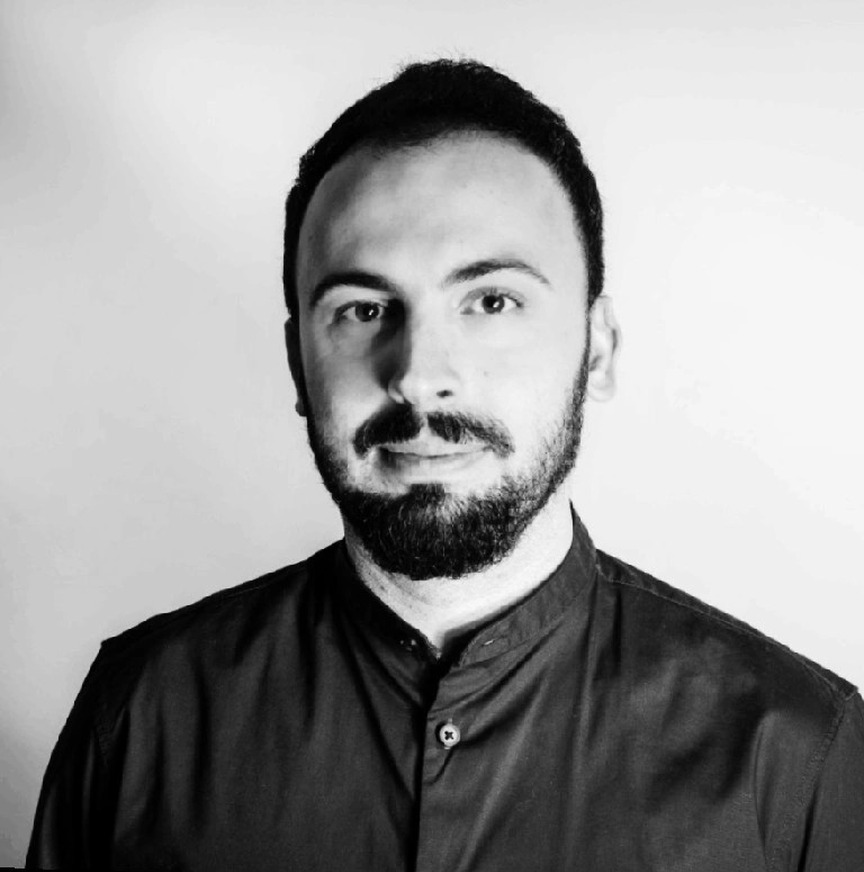
Khalid Al-Khatib
Assistant Professor in NLP · University of Groningen
Khalid Al-Khatib leads ArgsBase Lab. His work spans
computational argumentation, discourse analysis, structured
reasoning, and human–AI deliberation, with an emphasis on
systems that make reasoning more visible, interactive, and
useful for critical thinking.
Education & Experience
Service & Organization
Teaching & Supervision
Resources
Awards & Recognition
Experience
Selected academic positions across Groningen, Leipzig,
Weimar, IBM Research, and Stuttgart.
2022–present Assistant Professor · University of Groningen
Assistant Professor in NLP within the Computational
Linguistics environment.
2020–2021 Postdoctoral Researcher · Leipzig University
Research on argument-centered NLP and scholarly
argumentation.
2020 Postdoctoral Researcher · Martin-Luther University /
Bauhaus-Universität Weimar
Work on structured argument generation and related
language technologies.
Earlier role Researcher · Bauhaus-Universität Weimar
Research focused on the computational analysis of
argumentation strategies.
Research internship Research Intern · IBM Research Ireland
Industrial research experience in argument-centered
language technology.
2011–2013 Researcher · Institute for NLP, University of
Stuttgart
Earlier research experience in NLP and computational
language analysis.
Education
A concise summary of the academic path behind the group’s
research direction.
PhD in Computer Science
Bauhaus-Universität Weimar.
Dissertation:
Computational Analysis of Argumentation
Strategies .
Advisor: Benno Stein; external examiner: Manfred Stede.
Master’s and visiting graduate study
MSc in Computer Science, Jordan University of Science
& Technology.
Visiting Graduate Student, Masaryk University.
Area chair and reviewing
Service across major NLP conferences, workshops, and
journals.
Area chair roles ARR and COLING
Reviewing activity ACL, NAACL, EMNLP, AAAI, journals
Conference reviewing for ACL, NAACL, AAAI, COLING,
EMNLP, and EACL.
Long-running reviewing for the ArgMining workshop
series.
Journal reviewing for Language Resources and
Evaluation, Artificial Intelligence, Natural Language
Engineering, Argument & Computation, and JAIR.
Organization
Workshops, seminars, tutorials, and community-building
activity.
Workshops and seminars Dagstuhl, Lorentz, ArgMining, ArgKG, Vis4NLP
Co-organizer of the Lorentz workshop
Hybrid Argumentation and Responsible AI .
Co-organizer of the Dagstuhl seminar
Towards a Unified Model of Scholarly
Argumentation .
Co-chair of the 8th Workshop on Argument Mining.
Co-chair of the first Workshop on Argumentation
Knowledge Graphs.
Co-chair of the first Workshop on Visualization for
Natural Language Processing (Vis4NLP).
Tutorials and shared tasks Argumentation Technology for AI, Same-Side
Stance
Co-presenter of the tutorial
Argumentation Technology for AI .
Co-organizer of the Same-Side Stance shared task at
ArgMining.
Teaching
Current teaching is listed in more detail on the group
teaching page.
Supervision
Selected master’s and bachelor’s thesis topics supervised
across Weimar, Leipzig, and Groningen.
Master’s theses Selected topics
Identifying effective deliberation strategies in
Wikipedia talk pages.
Identifying debating strategies in persuasive
discussions.
Generating arguments depending on argumentation
schemes.
Style-based analysis of persuasive strategies.
Mining high-ethos evidence from Wikipedia.
Harvesting the web for building large-scale
argumentation graphs.
Bachelor’s theses Selected topics
Identifying debating strategies on Wikipedia.
Detecting bias in media.
Linking argumentative concepts in argumentation
graphs.
Detecting bias in summarization.
Discourse marker usage in written and speech
discourse.
Exploiting argumentation knowledge graphs for argument
generation.
Resources
Selected systems and tools connected to the group’s
research.
Datasets
Public data resources associated with Khalid’s work are
available via Webis.
Awarded by the QatarDebate Center in support of current
research activity.
Recognition from the Jantina Tammes School of Digital Society,
Technology and AI.
International fellowship recognizing doctoral research in
computational argumentation.
Earlier scholarships include support from the University of
Stuttgart, Erasmus Mundus Action 2, and Jordan University of
Science and Technology.